When it comes to “pro-sumer” audio peripherals Razer has no shortage of options, ranging from full over-the-ear headsets like the Kraken to wireless earbuds such as the new Hammerhead True Wireless earbuds. This wide offering is testament to every user’s own personal preference and needs when searching for a headset: some need the convenience of wearing a single earbud at the office while others want to be lost the noise-cancelling, beautiful sound of studio-style headphones. For this particular user, I was in the market for a replacement for my aging Razer Electra V2 USB headset: I’d wear the lightweight, over-the-ear headset over just one ear to keep myself aware in my office environment, and while still comfortable it was a bit cumbersome.
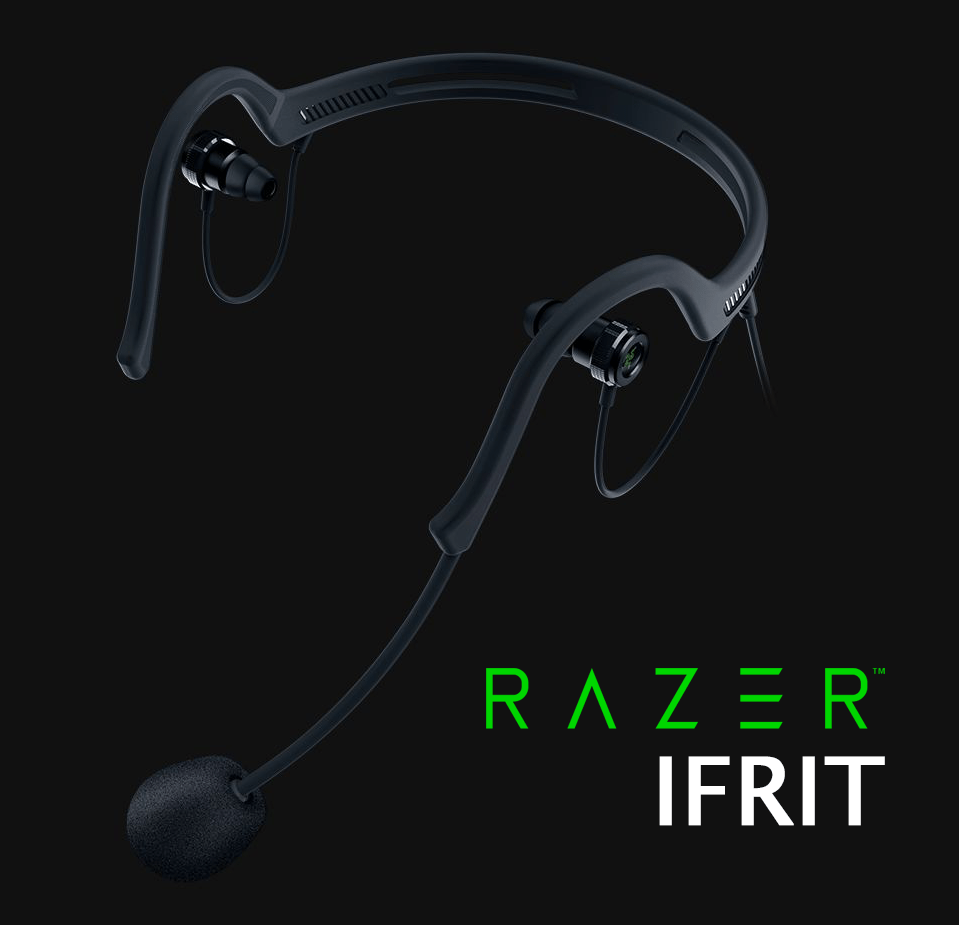
As a Razer fanboy I immediately looked to them for a replacement, something new, something better than my Electras. Earbuds? Maybe… Another headset worn over one ear? Probably not… Then something caught my eye: the Razer Ifrit. Priced at $99.99 USD and marketed to the streamer who doesn’t want “headset hair”, the Ifrit is a wired analog headset that comes packaged with a USB DAC (the Razer USB Audio Enhancer) with two inputs for that very common situation when you have two streamers that need to be piped into the same PC simultaneously. At first glance the Ifrit consists of a wired brace that wraps over your ears and extends a small boom condenser mic to the left of your face; audio is delivered via two wired earbuds that magnetically clasp together for storage behind your head when not in use. It attaches to devices via an analog cable terminated with a 4-pole 3.5 mm male jack. Overall an awkward looking headset, I decided to purchase it anyway as I needed audio and mic for Microsoft Teams and conferences, and having one earbud in my ear would allow for audio consumption while not closing my ears off from the rest of the office.
So, How Did They Do?
Well, the Ifrit headset took some serious getting used to. It’s form factor was very strange at first but Razer’s right, they’re incredibly lightweight and once you get used to them they just disappear. I’ve worn them with and without glasses and in both cases they are comfortable to wear for hours on end. The mic is on a small boom that is surprisingly stiff having used the Electra and Kraken 7.1 V2 in the past (at one point while bending it it actually felt like it snapped inside!) but after flexing it over a day or two it grew a bit more flexible. The cable for the Ifrit is exceptionally long and thin, meaning it’s not quite heavy enough to lay itself flat which results in a lot of curl: one week of use has not improved it, but hopefully it will straighten with time.
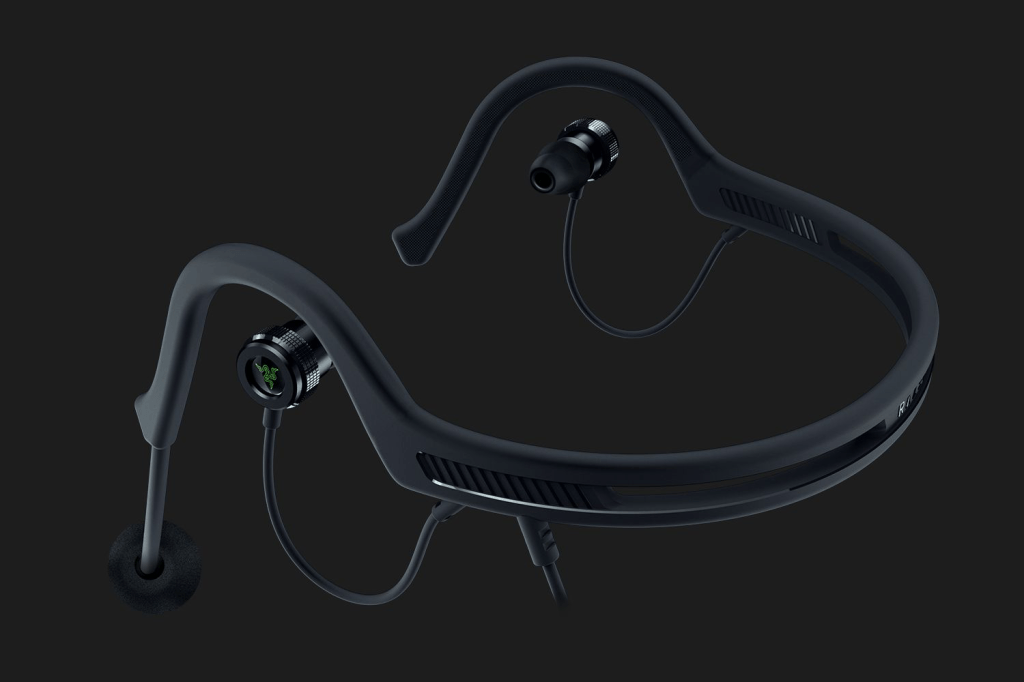
The earbuds come with two additional sets of silicone ear-tips but the pre-installed set are actually double-baffled and fit into my ear very well without getting loose. They deliver very good-quality audio (I would say on-par with my Krakens) and even with only one earbud in the audio is crisp and clear. The only downside that I’ve noticed is that the audio is LOUD when plugged into the USB DAC. Because it’s a USB device it shares its volume control with the OS of your computer, so there aren’t any separate volume levels you can set like with an analog mixer. With the Ifrit set to a volume of 14 in Windows I can hear system sounds at a normal level, but going any higher than 50 actively hurts my ears. With a range of 0-100 in Windows I’d like to get a little bit more range in the lower levels.
Razer claims the boom microphone is “broadcaster-grade” with “true to life quality” and I can vouch that it sounds very clear with nice amplification, though “broadcaster-grade” is a little excessive in my opinion. It’s a condenser mic, yes, but I’ve heard better; the dulcet tones you get from a Shure or Rode condenser mic over XLR equal “broadcaster-grade” in my book (for double the price), in fact my own Seiren X records a better, cleaner, and richer audio than the new Ifrit. But as a standalone headset sold for streaming I can say it will most definitely meet your needs. I’ve tested it in both gaming and lighter office communication tasks and it excels at both: the microphone records clearly and I’ve had no problems with it picking up ambient room sounds.
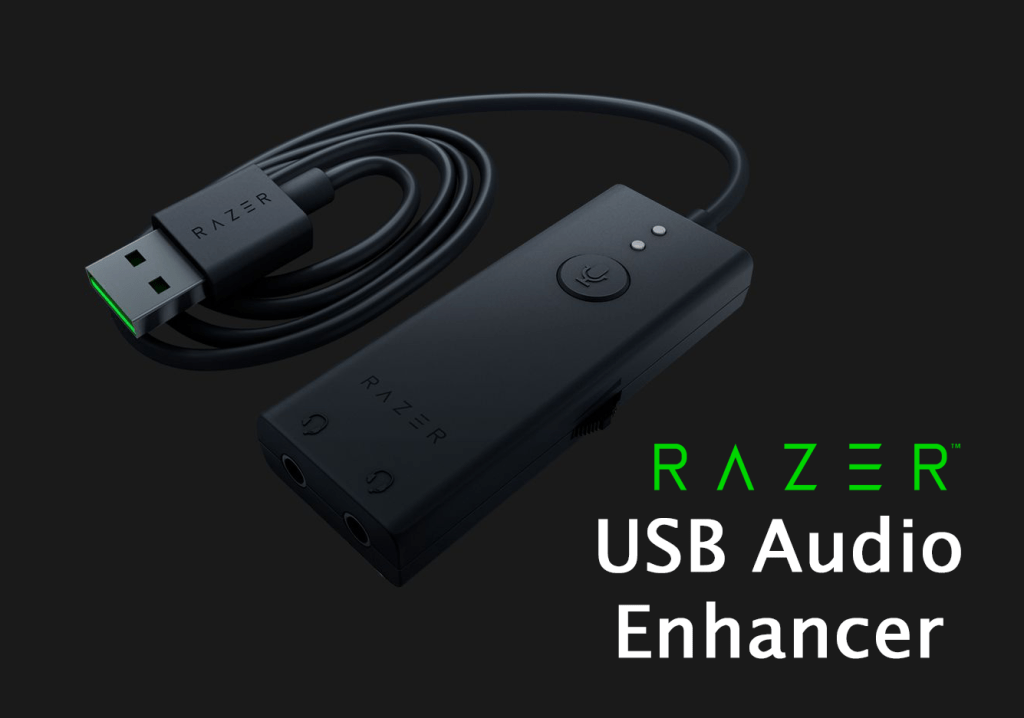
The USB DAC itself has some nice functionality which I would say validates its $20 USD price tag if you buy it separately on razer.com. Similar to the Chroma Hardware Development Kit the Razer USB Audio Enhancer comes with a silicone-esque grip surface on the bottom to allow it to affix itself to your desk, a handy feature for a device you would want staying in one place for easy access. As I mentioned it has two 3.5 mm inputs for a dual-vocal setup with another person as well as volume control, a microphone mute button and a headphone mute button activated by pressing down on the volume control dial. It has a 5′ USB cable to compliment the Ifrit’s 6.5′ analog cable which means you have a lot of room to play with when finding the ideal place to set it on your desk.
Concluding Thoughts…
If you’re in the market for a new headset I’d recommend the Ifrit under certain circumstances:
- you absolutely hate wearing over-the-ear headsets
- you’re going to be on camera and don’t want to wear a bulky set of headphones
- you want the discretion of earbuds but without the tiny in-line mic they tend to provide
- you just want something a little different
If any of those sound like you I’d suggest you give the Ifrit a try (if you can grab them on sale–$100 feels a bit high for what they are, but that’s in typical Razer fashion). From a mid-range gaming/streaming headset standpoint the mic is great and the audio is great, and you’ll look good wearing them while you game, vlog, stream, etc.. I like the Ifrit and will use it every day at the office; I might even take it home and try it one night during a stream. I doubt they’ll replace my Kraken 7.1 V2, but they definitely have their own niche to fill.
 The Chasm
Leave a comment