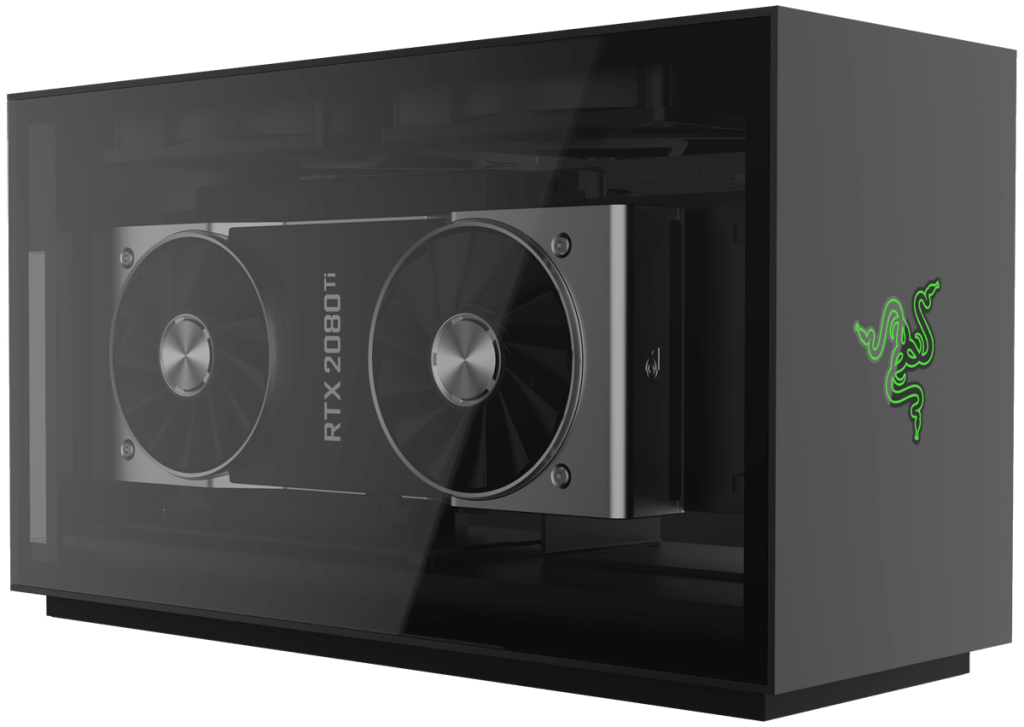
Project Christine, anyone? Okay, I know it’s not exactly the same thing, but Razer finally brought something to the table after announcing their “Fully Modular PC” concept all those years ago. I have to say that I was pleasantly surprised when I read about it and I think there is definitely some potential here for modular PCs with the further development of Intel’s “Element”.
The landscape of the custom PC market today is vibrant, to say the least. I wouldn’t go as far as to say “thriving”, but the sheer amount of variety and price levels point to a well-developed and accessible market. You want it: you can build it, and while it isn’t overwhelmingly difficult to build a PC the initial planning can be a little daunting. Does this CPU work with this motherboard? Is it the right socket? Does it support quad-channel RAM, and will my specific RAM be throttled because the motherboard doesn’t support the right speed? Can I use an m.2 drive, and will it take away from my PCI slots if I do? There are many questions that must be answered ahead of time when selecting your parts, and while there are many resources and automation to turn to, inevitably something will come up that you didn’t foresee.
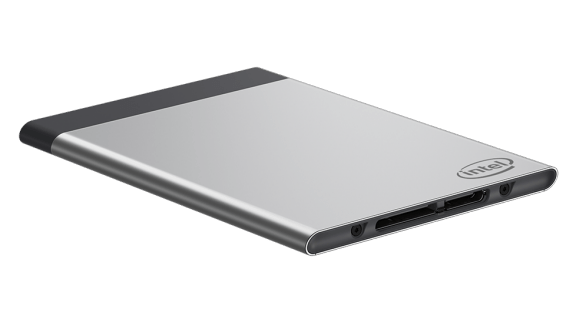
Enter Razer. Back in 2014 they announced Project Christine, a fully-modular PC with specific computing modules that would attach to a backplate and power supply. All of the modules would be inter-operable and compatible, with none of the multi-layered incompatibility you can run into with today’s PC building. It never panned out, but in 2017 Intel announced they had plans to release a compute card that would contain all the basics of computing: CPU, DRAM, storage and the modules for Wi-Fi and Bluetooth. These cards would slide into a larger housing unit like a laptop or desktop form factor that contained the I/O ports and monitor, GPU, etc.. While these Compute Cards never came to market in any real strength the concept of modular component “bundles” as opposed to the components themselves was intriguing and continued to live on. After all, it was a convenient way to upgrade or customize a PC to your needs without needing to alter multiple components at once: simply swap out your “Compute Unit” and you get a new socket and CPU while keeping the rest of your PC intact. Intel eventually revived this concept with their Compute Element and NUC line of products in October of 2019 with the announcement of “The Element”, a dual -slot PCIe card that was itself a complete PC, minus the power supply and any extra PCIe slots. The Element is designed to plug into a female PCIe backplate with other PCIe slots and a power supply to form a modular PC, very similar to Razer’s original design for Project Christine.
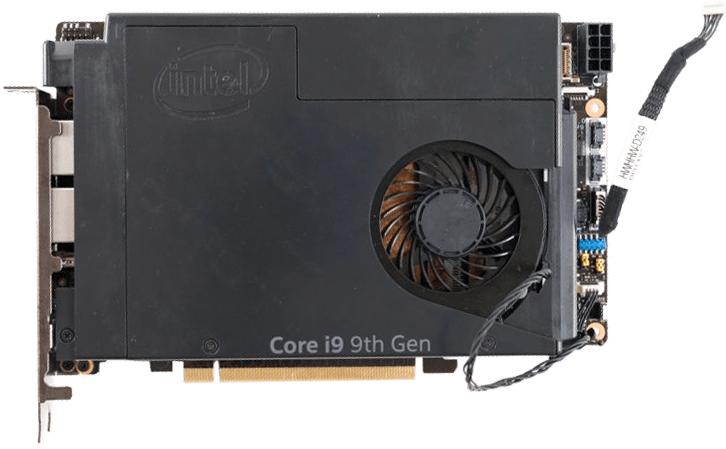
The Razer Tomahawk aims to be the modern incarnation of Project Christine: an easily modular PC for the enthusiast that can be modified to best suit your needs whether you’re a “gamer, streamer, or content creator” as per Razer’s website. They are using Intel’s “Element” as the core of the PC: The Element plugs into a 2-slot PCIe backplate to connect it to a full desktop-class GPU of your choice and a standard-looking power supply. Razer has announced an i7 variant with an RTX 20-series GPU, 16GB of DDR4 and a 512GB SSD (with an i9/RTX 2080 Super model mentioned) for around $2000 USD, however the Intel CPUs are H-series mobile chips and according to Razer’s infographic the DRAM is laptop form-factor as well. Razer pointed out that Intel will be selling more variants of “The Element” to consumers, and considering that the first Element shown on stage in 2019 had a desktop-class Xeon CPU it wouldn’t be far-off to expect other desktop-class chips in future Element models. But for now all of this boils down to a $2000+ performance laptop with a desktop-sized GPU, not necessarily what the PC enthusiast is looking for in a desktop build.
The chassis itself is beautiful but again, its small form-factor severely limits its overall usability. In its promotional renders Razer models the Tomahawk on a desktop offering a “minimalist aesthetic with clean lines” which may be true, but I doubt you’ll be enjoying your “minimalist environment” with a small jet engine sitting next to you. The Tomahawk chassis has flat front and bottom panels with no airflow, solid glass sides to the left and right with no airflow, a grille on top with dual fans (not sure if Razer has them as intake or exhaust by default, I would assume intake) and then a small rear grille with no fan. If a gamer decides to fire up something to play and that GPU starts to heat up… those top fans and GPU fans will be blowing at full speed, I guarantee it! Not to mention the blower-style heat sink on the unlocked mobile CPU; if the CPU isn’t enough of a bottleneck the thermal throttling sure will be!
None of this is to hate on Razer: I’m a loyal consumer of their products and love to see their innovation. The Tomahawk is an impressive product and the Intel Compute Unit is an amazing design feat that I think shows great promise, but for the market Razer is targeting I fear that the Tomahawk will disappoint in a similar way that Apple’s computers do these days: a high price-tag for an impressive and beautiful product, but one that makes sacrifices in order to deliver those previous attributes. Cross-drill those tempered glass panes where the GPU sits, make the front panel a grille with the Razer logo and a 120mm intake fan, do something to keep the thing from overheating in an unavoidable way, otherwise the Tomahawk will end up falling short of its true potential.

Personally I think the Tomahawk is a striking piece of equipment and I could see myself using one as a secondary streaming PC, but it is definitely not a replacement for my current PC and I don’t think it really brings much more to the table than your average pre-built on the market today. However, if Intel brings desktop-class chips and DRAM to their consumer offering of The Element then a slightly larger Tomahawk with improved cooling could truly be a viable alternative to the modern desktop PC, and maybe even pave the way for a new breed of PCs altogether!
 The Chasm
Leave a comment